
How Much Do Google Ads Cost for Dentists? [2026 Real Data]
Real Google Ads costs for dentists from $20M+ in managed ad spend. CPC ranges, budgets, and ROI data from actual dental campaigns.
TL;DR: Most dental practices pay $2 to $35 per click on Google Ads depending on the procedure, with monthly budgets of $1,500 to $10,000+. Based on Creekside Marketing’s management of dental ad campaigns totaling over $20M in ad spend, well-optimized campaigns typically produce a 5x to 8x return, with cost per lead ranging from under $4 to $131 depending on case value.
| Metric | Value |
|---|---|
| CPC Range | $2 - $35 per click |
| Recommended Monthly Budget | $1,500 - $10,000+ |
| Typical Conversion Rate | 8% - 15% |
| Cost Per Lead | $4 - $131 (varies by procedure) |
| Expected ROI | 5x - 8x on ad spend |
| Time to First Leads | 1 - 2 weeks |
If you are a dental practice owner trying to figure out how much Google Ads actually costs, you have probably gotten the same frustrating non-answer from every agency: “it depends.” That is technically true, but it is also useless. You need real numbers to make a real decision.
According to Creekside Marketing’s analysis of dental ad campaigns managing over $20M in total ad spend, we are going to break down exactly what you should expect to pay, what kind of results those dollars produce, and whether Google Ads is worth it for your practice. No fluff, just data from campaigns we have actually run.
How Much Do Google Ads Cost for Dentists Per Click?
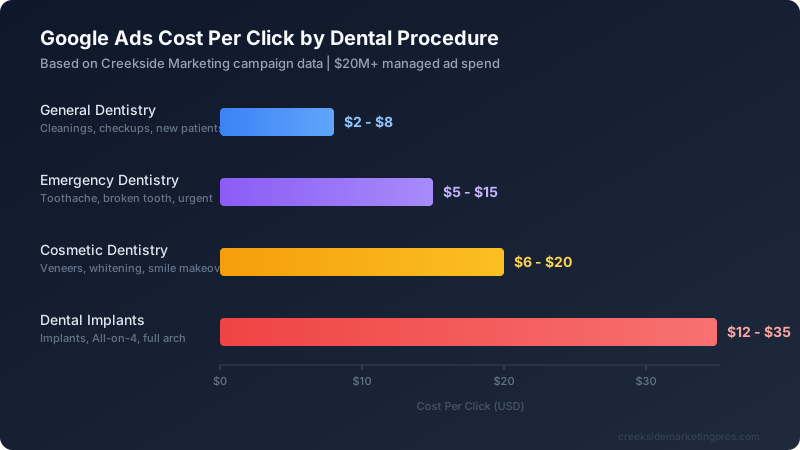
Dental Google Ads cost between $2 and $35 per click, depending on the procedure type. General dentistry keywords run $2 to $8, while high-value procedures like dental implants can reach $35 per click. Based on Creekside Marketing’s management of dozens of dental campaigns across competitive U.S. markets, here is what we consistently see:
General Dentistry Keywords (cleanings, checkups, new patient specials): $2 to $8 per click. These are your bread-and-butter terms. Competition is moderate, and the intent is strong because someone searching “dentist near me” is ready to book.
Emergency Dentistry Keywords (emergency dentist, toothache, broken tooth): $5 to $15 per click. Higher urgency means higher competition, but these patients convert fast and often become long-term patients.
Cosmetic Dentistry Keywords (veneers, teeth whitening, smile makeover): $6 to $20 per click. These carry higher CPCs but also higher patient lifetime values.
Dental Implant Keywords (dental implants, implant dentist, All-on-4): $12 to $35 per click. This is the most expensive category in dental advertising. A single implant case can be worth $3,000 to $30,000, so the math still works even at premium CPCs.
According to Creekside Marketing’s campaign data, one of our dental aesthetics clients in Southern California averaged a $6.41 cost per click across 7,380 clicks over a four-month campaign period. That is well below industry averages because of tight keyword targeting and quality score optimization. You can see the full campaign breakdown here.
How Much Should a Dental Practice Spend on Google Ads Per Month?
Most single-location dental practices should budget $3,000 to $6,000 per month on Google Ads to generate 30 to 60 new patient leads consistently. Practices in smaller markets can start at $1,500, while multi-location or implant-focused practices may need $10,000+. Here are practical budget tiers based on what we see working:
Starter Budget: $1,500 to $3,000/month. This works for practices in smaller markets or those testing Google Ads for the first time. You can expect 15 to 30 leads per month at this level. Based on Creekside Marketing’s management of Polaris Dentistry, we took them from 26 conversions in an entire year to 413 conversions in the following year on a modest budget. You do not need to spend a fortune to see results.
Growth Budget: $3,000 to $6,000/month. This is the sweet spot for most single-location practices. You get enough data to optimize campaigns effectively and enough volume to keep your schedule full. At this level, you should be generating 30 to 60 new patient leads per month.
Aggressive Budget: $6,000 to $10,000+/month. Multi-location practices, implant-focused practices, or dental aesthetics practices that need high volume. One of our dental aesthetics clients in Southern California spends roughly $100,000 per month across Google and Meta and generates over 100 consultations monthly, producing an estimated $200,000+ in potential monthly revenue. But they started much smaller and scaled after proving ROI.
The minimum viable budget for Google Ads in dental is around $1,500/month. Below that, you simply do not get enough clicks to generate meaningful data or consistent leads.
What Conversion Rates Should Dentists Expect from Google Ads?
Dental practices running well-optimized Google Ads campaigns should expect conversion rates between 8% and 15%, meaning 8 to 15 out of every 100 clicks result in a call, form fill, or booking. Cost per conversion ranges from under $4 for general dentistry to $131 for high-value cosmetic cases. Based on Creekside Marketing’s analysis of dental campaigns across multiple markets, here is where it gets interesting with real numbers:
For a dental aesthetics practice in Southern California, we achieved a $131 cost per conversion across 361 total conversions. The CPA started at $48.79, and through campaign restructuring we drove it down to $9.58. At an average case value of roughly $20,000 for cosmetic dental procedures, that math is hard to argue with. You can see the full results here.
For Polaris Dentistry, we drove cost per conversion below $4. That practice went from struggling to stay open to generating a 500%+ return on their ad spend.
The key difference between these two numbers: general dentistry leads are cheaper to acquire but carry lower case values, while cosmetic and implant leads cost more but each conversion can be worth $10,000 to $30,000.
Top Dental Keywords and What They Cost
The highest-converting dental keywords are location-specific, high-intent terms like “dentist near me” at $3 to $8 per click. Dental implant keywords are the most expensive at $12 to $35 per click, but carry the highest patient values. Based on Creekside Marketing’s analysis of dental ad campaigns across competitive U.S. markets, here are the most common keywords dental practices bid on:
| Keyword | Estimated CPC | Intent Level |
|---|---|---|
| dentist near me | $3 - $8 | High (ready to book) |
| emergency dentist | $8 - $15 | Urgent (same-day) |
| dental implants near me | $15 - $35 | High (high-value) |
| cosmetic dentistry | $8 - $20 | Research/Commercial |
| teeth whitening | $4 - $10 | Commercial |
| dental cleaning | $2 - $6 | High (routine care) |
| best dentist in [city] | $3 - $10 | High (comparison) |
| dental implant cost | $12 - $25 | Research (price shopping) |
The most cost-effective keywords tend to be location-specific, high-intent terms like “dentist near me” or “dental office [city name].” These convert at the highest rates because the searcher is actively looking for a provider, not just browsing.
Dental implant keywords carry the highest CPCs, but they also carry the highest patient values. A $35 click that turns into a $15,000 implant case is a 400x return on that single click.
Google Ads vs. SEO vs. Direct Mail for Dentists
Google Ads is the fastest way for dental practices to generate new patients, delivering leads within 1 to 2 weeks of launch. SEO takes 6 to 12 months but provides free organic clicks long-term. Direct mail response rates have dropped to 0.5% to 2% and cannot target by intent. Here is how each channel compares:
Google Ads delivers results fast. You can start getting calls within days of launching. The downside is that you pay for every click, and costs are ongoing. Best for practices that need patients now.
SEO is a long-term play. It takes 6 to 12 months to see meaningful organic traffic, but once you rank, those clicks are essentially free. The challenge is that dental SEO is competitive, and you are still paying an agency monthly to maintain rankings. Best as a complement to paid ads, not a replacement.
Direct Mail still works in dental, but response rates have dropped significantly. Typical response rates run 0.5% to 2%, and you cannot target by intent the way you can with Google Ads. A $5,000 direct mail campaign might generate 25 to 100 responses, but many of those are low-quality. Google Ads lets you reach people who are actively searching for a dentist right now.
Our recommendation: start with Google Ads to drive immediate patient flow, then layer in SEO for long-term growth. Direct mail can supplement, but it should not be your primary channel.
Is Google Ads Worth It for Dentists? (ROI Analysis)
Yes. Based on Creekside Marketing’s management of dental campaigns totaling over $20M in ad spend, a well-run dental Google Ads campaign typically returns 5x to 8x on ad spend, with some practices seeing 500%+ ROI. Here is the math with conservative numbers:
- Monthly ad spend: $3,000
- Average CPC: $6
- Clicks per month: 500
- Conversion rate: 10%
- New patient leads per month: 50
- Close rate (leads to booked patients): 40%
- New patients per month: 20
- Average first-year patient value: $1,200
Monthly revenue from Google Ads patients: $24,000 Monthly ad spend: $3,000 Return: 8x your investment

And that is conservative. According to Creekside Marketing’s client data, one general dentistry client added $30,000 to $40,000 in monthly revenue after we optimized their Google Ads campaigns. Polaris Dentistry went from losing money to generating a 500%+ ROI after we rebuilt their entire ad strategy, dropping their cost per acquisition to below $4. One of our dental aesthetics clients in Southern California generated an estimated $200,000+ in potential monthly revenue within 90 days of launching their rebuilt campaign.
The lifetime value of a dental patient makes the math even more compelling. A single patient who stays with your practice for 5 to 10 years is worth $5,000 to $15,000 in total revenue. Even at higher CPCs, you are investing $50 to $200 to acquire a patient worth thousands.
Frequently Asked Questions
How long does it take to see results from dental Google Ads?
Most dental practices start seeing leads within the first 1 to 2 weeks of launching Google Ads. However, based on Creekside Marketing’s experience managing dental campaigns, it takes about 60 to 90 days of data collection and optimization before campaigns hit peak performance. The Google Ads algorithm needs conversion data to optimize effectively, and that takes time.
Can I start Google Ads with a small budget?
Yes. A dental practice can start Google Ads with as little as $1,500 per month and still generate meaningful results. The key is focusing your budget on high-intent, location-specific keywords rather than spreading it thin across broad terms. Polaris Dentistry went from 26 annual conversions to over 400 on a tight budget by targeting the right keywords. You can read their full case study here.
What if my competitors are bidding more than me?
A higher bid does not guarantee a better ad position. Google rewards relevance and quality. We consistently outperform competitors with bigger budgets by writing better ad copy, building better landing pages, and maintaining higher quality scores. Your cost per click can actually decrease over time as your account history improves.
Should I run Google Ads and Meta (Facebook) Ads together?
For most dental practices, Google Ads alone is a strong starting point because it captures people actively searching for a dentist. Meta Ads work well as a complement, especially for cosmetic and elective procedures where you need to generate awareness. We often run both channels together for our dental clients and use CRM integration to track which channel drives actual booked appointments, not just leads.
Do I need a landing page, or can I send traffic to my website?
A dedicated landing page almost always outperforms your general website homepage for Google Ads traffic. Landing pages are focused on one action (call or book) with no distractions. Based on Creekside Marketing’s A/B testing across dental campaigns, we have seen conversion rates double or triple when practices switch from sending traffic to their homepage versus a purpose-built landing page.
Ready to See How Your Dental Google Ads Stack Up?
Want to see what running ads at this level actually looks like week to week? I share what’s working and what’s not from the accounts we manage in a weekly newsletter. Real numbers, real results.
Subscribe to the Creekside Newsletter
About the Author Peterson Rainey is the founder of Creekside Marketing, a performance-driven digital advertising agency managing over $20M in ad spend across Google Ads and Meta Ads. He specializes in helping dental practice owners grow through data-driven paid advertising strategies.
